Empowering Women to become change makers
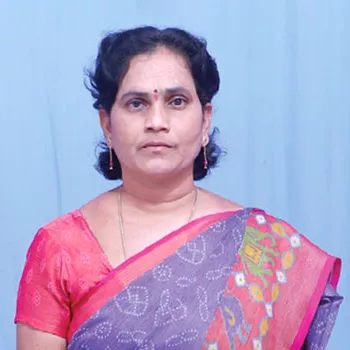
When Kattoju Devi's husband left her and their two daughters, she thought her world had ended. She lived in the remote village of Sarapaka in Telangana, where life revolved around family and tradition. Yet, now, she had to fend for herself, and her daughters, without having an education to fall back on or any skills to speak of. The future looked bleak and extreme poverty seemed imminent. The year was 2009 and Devi was only 25 years old.
Today, Devi is a proud entrepreneur with her own tiffin enterprise and a catering service. Her daughters are grown up and educated. She dreams of expanding her business into a hotel. What changed? In 2018, Devi learnt about ITC's women empowerment programme and chose to participate in it, altering the trajectory of her life.
Over the years, ITC's women-focused initiatives under its Mission Sunehra Kal initiative have catalysed a range of purposeful engagements in areas such as economic empowerment, agrientrepreneurship, financial inclusion, skilling, health, sanitation and wellbeing. These interventions have reached out to over 50 lakh women across India.
Empowering the underprivileged
ITC's multidimensional CSR initiatives have supported over 50 lakh women
ITC's Programme focuses on the holistic development and wellbeing of the marginalised and vulnerable communities through a Two-Horizon approach: to strengthen current livelihoods, and build capabilities for the future, and keeping women at the core of these programmes. These interventions are inclusive in approach and design, engaging women in planning and implementation through processes like participatory rural appraisals, household surveys, focused group discussions and empowered grassroots institutions meant for the sustenance of the interventions.
These programmes support women to diversify their livelihoods, improve their knowledge, incomes and quality of life, and more importantly feel empowered and experience higher self-esteem. They focus on the overall wellbeing of women, particularly from weaker sections, and unleash their entrepreneurial spirit and energy. Some of these interventions also enable the most disadvantaged women to become economically independent.
In Devi's case, she was selected for ITC's "Targeting Hardcore Poor (THP) Programme". For about six months she received a consumption stipend along with entrepreneurship training and support of assets to set up a small tiffin centre followed by handholding for two years. She also received training in Financial Literacy and joined a Self-Help Group (SHG) which enabled her to open a bank account, save money, take a loan to expand her business and even enroll in government social security schemes to secure her family's future. Like Devi, ITC's THP Programme has helped over 36,000 women across eight states increase their income nine-fold and assets by nearly three-fold (on an average), many of whom would now also be Lakhpathi Didis.
Supporting Women Entrepreneurs
ITC's multWomen form over 75% of total beneficiaries covered under ITC's Social Investments Programme.
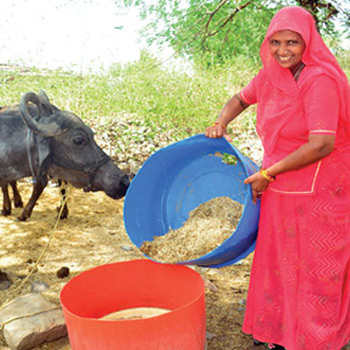
Shyam Kunwar, in Jhalawar, Rajasthan, is a widow and mother of three and a proud farmer today. Determined to change her life, Shyam Kunwar went from working as a daily wage laborer for a decade after her husband suddenly died, to joining an ITC-run Farmer Field School for women. She says, "I learned about improved agriculture practices, saved money through the higher income gained from adopting these practices, started a small grocery shop and also began to grow crops on my 1.2 acres of land. With the assistance of the SHG, I was able to invest in a flour machine and a deep freezer and purchase two buffaloes."
Another participant of ITC's women farmer programme is Nandini Devi from Gaurahi village in Sonbhadra, Uttar Pradesh. Once a stay-at-home mother of two boys, she struggled to make ends meet until she began earning nearly Rs.4 lakh per annum. How did she achieve this? "Under ITC's programmes, I learnt how to grow healthy crops, got a Kisan Credit Card loan with which I dug a bore-well to water my crops, ensured power for irrigation and availed micro-irrigation schemes for farmers like me and forayed into dairy farming as an extra source of income," she recounts.
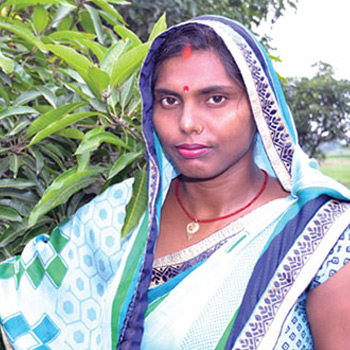
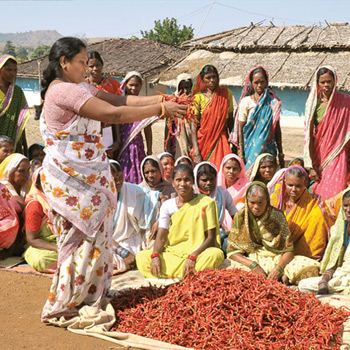
ITC recognises the vital contribution of women like Shyam Kunwar and Nandini Devi to India's agricultural economy. To leverage their strengths and help them establish successful enterprises, ITC has set up over 460 women Farmer Field Schools, over 300 Agri Business Centres (ABCs) & enterprises like coco peat production, nurseries and other Women Farmer Collectives under ITC's 'Mission Sunehra Kal'. Women participants receive skill training and financial and marketing support.
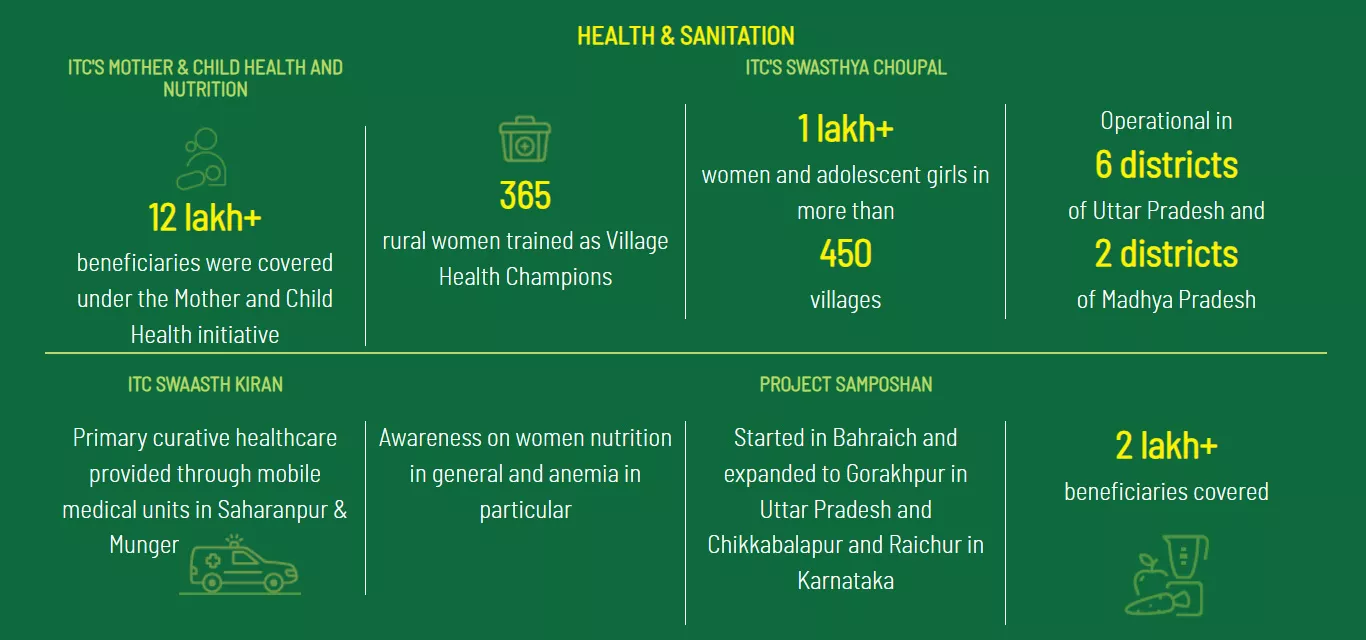
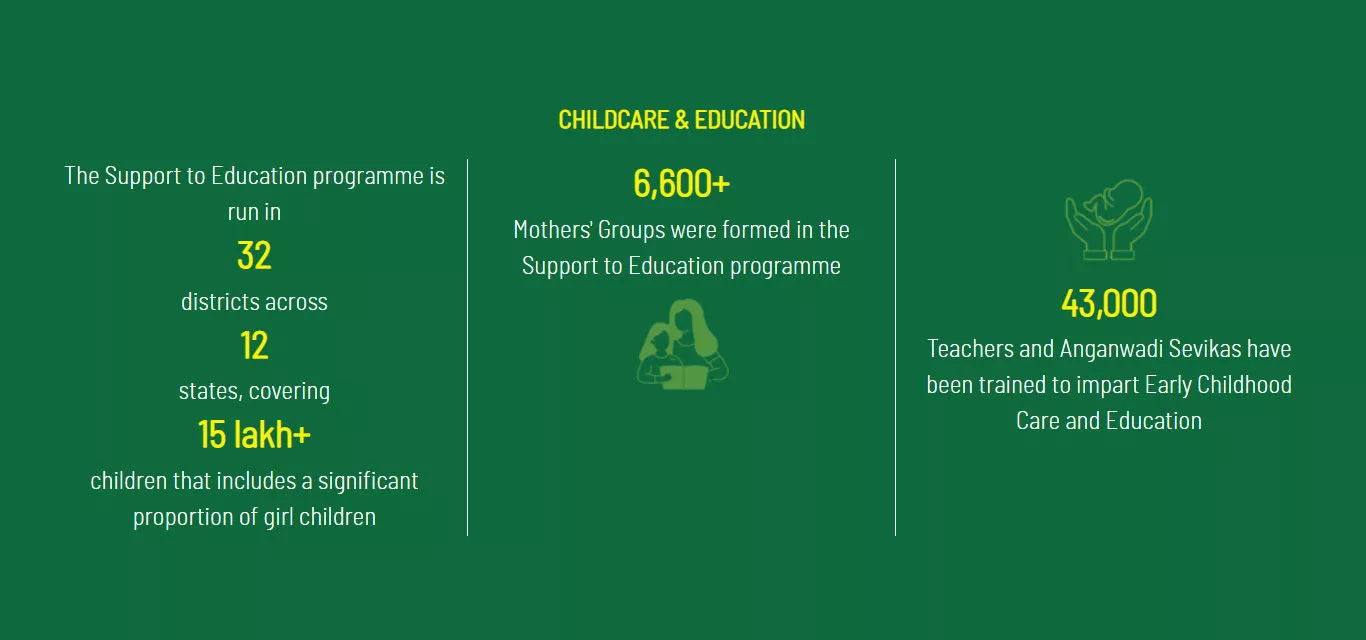
Women have also been trained as cadre of service providers such as Krishi Sakhis (to support women in agriculture), Yojana Sakhis (to support the community on awareness of government schemes), Pashu Sakhis (to help in rearing of small ruminants) and Village Health Champions (to help create awareness on health and hygiene). This is in addition to the thousands of ASHA workers and Anganwadi Sevikas that ITC trains and engages with across several states in partnership with governments.
Women are empowered to participate in various grassroots institutions and collectives such as Water User Groups, Forestry groups (Vannikaran Sanghas), 'all women FPOs' under the ITCMAARS agritech platform, Smart Moms (helping reinforce learning among rural children), Mohalla Committees and many more such opportunities. The result is that women experience inclusion in a more equitable manner.
Over 22 lakh women have been covered under financial literacy and inclusion interventions of ITC's partnership with Madhya Pradesh State Rural Livelihood Mission resulting in enhanced knowledge of financial planning, linkages to savings, credit, insurance, and social security
Transforming Lives
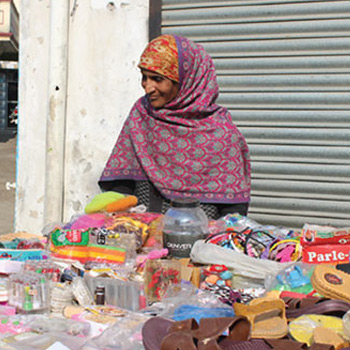
A widow and mother of three, 35-year-old Farjana was covered under the ITC's THP programme to run her own Micro-enterprise with asset and hand-holding support facilitated by ITC. She was helped to join a SHG and thus got access to finance and assets that helped her to start selling cosmetics and expand her business later. "When I lost my husband, my children had to drop out of school and I had to get a job as a domestic help. I never dreamt that I would have my own business one day. My children have now gone back to school and my cosmetics business has expanded to include footwear," she says with a new-found confidence and pride.
Enabling women like Farjana to overcome financial inadequacy, expand their skills and knowhow for better opportunities, and promoting co-operative action and collective enterprises are a part of ITC's interventions towards women empowerment.
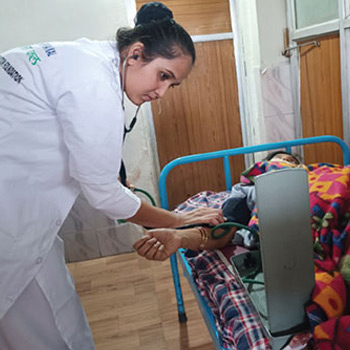
21-year-old Sapna Puri from Ram Pura village in Sehore, Madhya Pradesh came from a family that survived on an income of just Rs.5,000 a month. Going to college was not an option for her because she needed to find a job straight out of school and that too without a degree or professional training. That was until she enrolled in ITC's vocational training programme and trained to become a General Duty Assistant in healthcare. Sapna tells us "I learned to nurse patients, understand their needs and respond with empathy. When my course finished, I got a job right away as a caregiver for the elderly. Now I earn Rs.11,000 monthly and my goal is to become a qualified nurse someday." ITC's Vocational Training Programmes have trained over 1 lakh youth across 16 states, including 38,000 women.
Women Empowerment and Contribution to UN SDGs
36,000+ women living in extreme poverty have come out of the same through the THP Programme
- SDG target: End discrimination against women
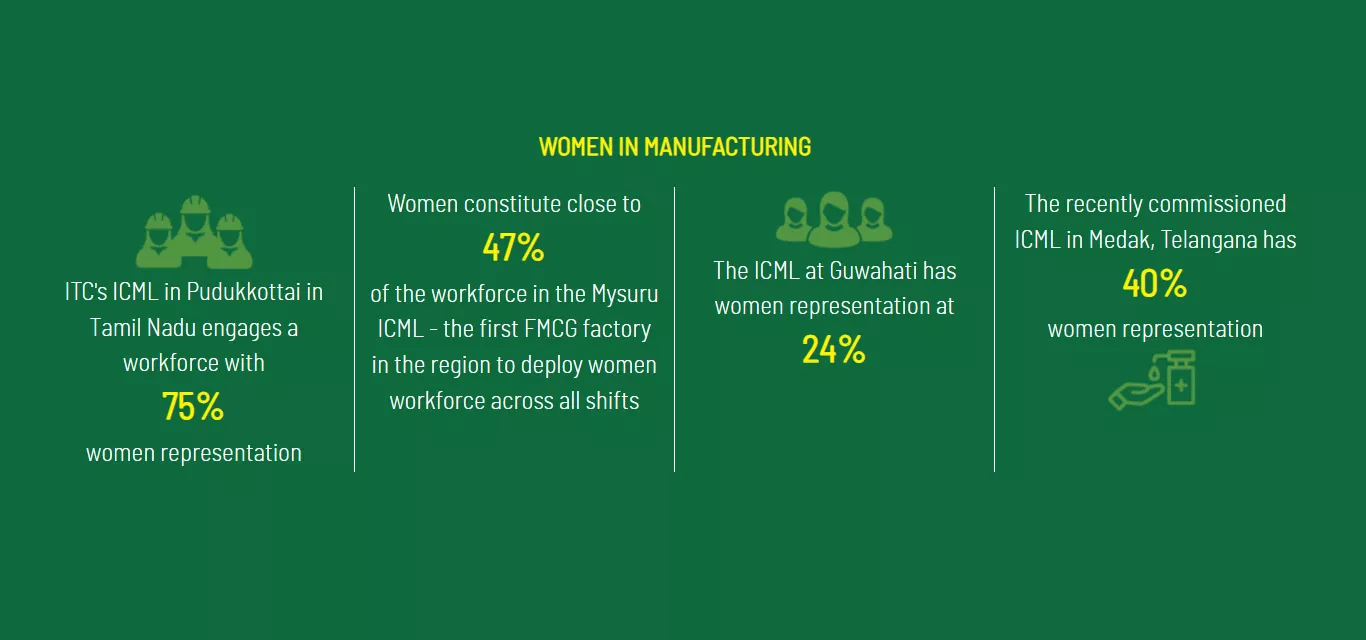
- Significant women representation in select new IC MLs
- Higher than normal ratio of women recruitment from premier campuses
- Gender sensitisation and inclusive hiring workshops
- Women-focused wellness programmes
- SDG target: Equal opportunities for leadership
- Women-focused leadership programmes
- SDG target: Women's right to ownership
- Access to information and products related to finances
- Livelihood interventions
- Access to physical resources like water and livestock
- SDG target: Technology for women empowerment
- Promoting use of digital tools in education, financial literacy and maternal/child health
Creating an Equal Future
ITC's Women Economic Empowerment Programme has created sustainable livelihoods for 1.4 lakh women like Devi, Shyam, Nandini, Farjana and Sapna till date and has a target of covering 2.5 lakh by 2030.
These days Kattoju Devi is continuing to run her tiffin centre with catering services successfully. Her daughters are pursuing higher education and the family now lives in a better house. Shyam Kunwar's family moved into a 'puccaa' house and her grocery store recently got a facelift. In Farjana's home, the addition of a fridge and television has caused much excitement. When Sapna Puri isn't caring after the elderly, she is studying for a Bachelor's degree in nursing and also supporting her siblings' education. Nandini Devi was felicitated with the Pragati Sheel Kisan Sanman by the Uttar Pradesh government and has even been a guest on the Lokwadi programme on All India Radio, bringing pride and inspiration to her community. In these transformative journeys, it is evident that the women not only achieved personal success, but also experienced a significant boost in confidence and 'samman', leading to better quality of life.
As change makers, women empowered by ITC's initiatives are coming out from the shadows, elevate their quality of life, and actively contribute to building a more equitable society for future generations.
Other Focus Areas