
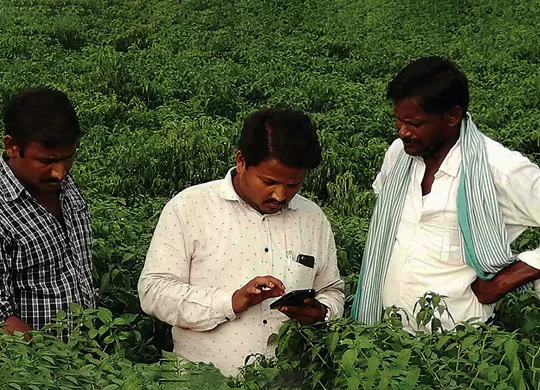
Global supply chains are evolving across industries with rising digitalisation, a stronger focus on sustainability and responsible sourcing. Recent supply chain disruptions, often due to unprecedented climate change-related events, have emphasised the need for greater supply chain sustainability. Additionally, the global movement towards net zero is also driving massive supply chain transformations. Addressing these trends is therefore key to building resilience and embedding sustainability in the supply chain.
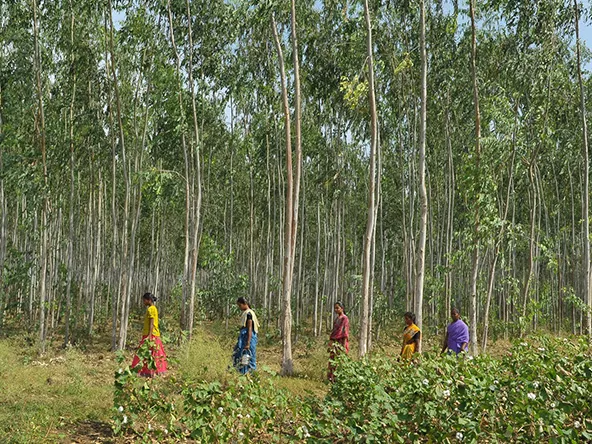
Upstream
- Farmers/Mandis/Auction platforms
- Other Suppliers
- Key Agri Products
- Wheat
- Potato
- Pulpwood
- Spices
- Milk
- Fruits
- Bamboo
- Leaf Tobacco
Operations
- Agri Business
- FMCG
- Foods
- Personal Care Products
- Education and Stationery Products
- Matches & Agarbattis
- Cigarettes
- Paperboards & Specialty Papers
- Hotels
- Information Technology
Downstream
- Warehouses
- Distributors and Retailers
- Customers
- Exports
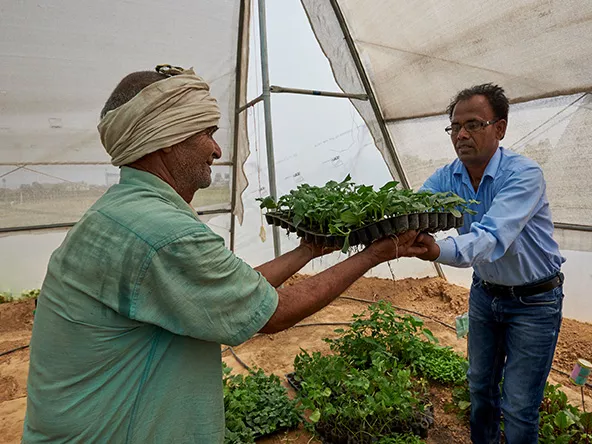
The portfolio continues to be rapidly scaled up, leveraging ITC's deep rural linkages and extensive sourcing expertise towards strengthening and customising supply chains for traceability. The division has large-scale programmes on sustainability certifications of traded commodities driven by customer demands and emerging international regulations on due diligence and transparency.
Implementing Sustainable Agriculture Standard in Coffee Value Chain
ITC has implemented the Rainforest Alliance 2020 Sustainable Agriculture Standard in traditional coffee-growing regions. The Standard requires all certified farms to be managed efficiently, transparently, inclusively, and economically. The certification programme focuses on 6 key areas:
- Management
- Traceability
- Income and Shared Responsibility
- Farming Practices
- Social Welfare
- Environmental Stewardship
Integrated Adarsh Gram Programme
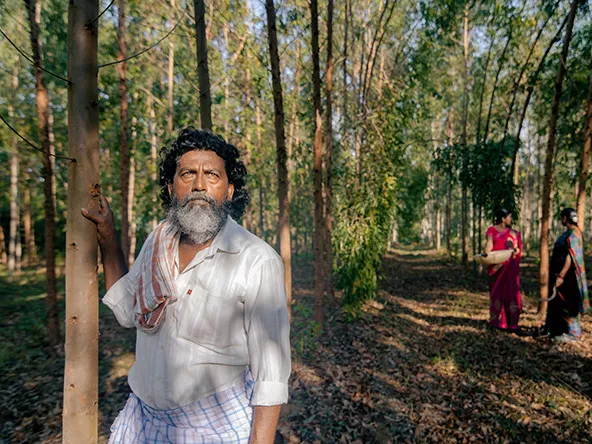
Ensuring Human Rights in the supply chain is a part of ITC's Integrated Adarsh Gram Strategy (Model Village Approach). The programme focusses on building economic, environment and social capital in over 360 villages of Andhra Pradesh and Karnataka impacting over 30,000 farmers. ITC's Agri-extension and field teams play a critical role in understanding the needs and grievances of farmers and supply chain partners.
Engaging with Third Party Manufacturers
ITC encourages critical value chain partners like third-party manufacturers to adopt management practices detailed under International Standards. Ensuring compliance with accepted standards is a key part of the agreements with value chain partners, covering areas such as:
- EHS (Environmental, Health and Safety)
- Human Rights
- Labour Practices
Supporting a Local and Inclusive Value Chain
ITC actively promotes the competency development of local vendors, with a strong focus on medium and small-scale enterprises that are proximate to its manufacturing locations. The total percentage of input material sourced from suppliers within India is over 92%.
ITC also works closely with small-scale units in industries such as:
- Education & Stationery Products
- Safety Matches
These partnerships have enhanced the survival and competitiveness of several small-scale units.
In line with its commitment to bring the power of cutting-edge digital technologies and unlock the potential of India's farmers, ITC has launched ITCMAARS (Metamarket for Advanced Agriculture and Rural Services), a 'phygital' ecosystem that empowers farmers by providing:
- Hyperlocal & Personalised solutions
- Synergistically integrating NextGen agri technologies
Going forward, ITC will focus on scaling up its efforts towards:
- Building Capacity of Value Chain Partners
- Conducting Structured Sustainability Assessments of Key Suppliers
- Partnering with Key Suppliers on their Sustainability Journey


Know more about ITC's Sustainability Interventions
FSC FM License Code (FSC®-C102390)
Chain of Custody Certification from the Forest Stewardship Council® (FSC®-C064218)