
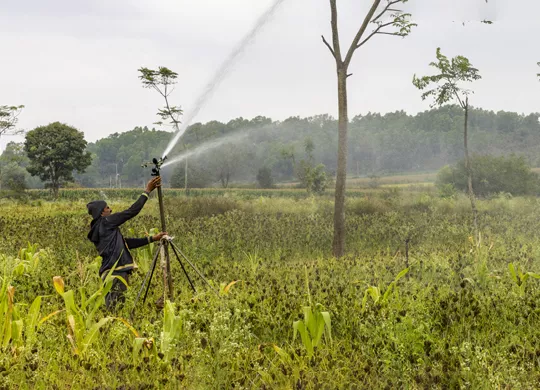
Never before has the threat of climate change been more daunting. Extreme weather events pose a global climate emergency that calls for colossal efforts from nations, corporates and citizens alike. The climate crisis will exacerbate the challenges of food and livelihood security, particularly in developing countries where agriculture is the mainstay. The vulnerability in rural areas, together with the growing incidence of urban water crisis, intolerable heat, and the threat of rising sea levels will require innovative strategies and decisive action plans. Today, the inevitability of breaching the 1.5°C threshold not only requires the acceleration of decarbonization and mitigation measures but also calls for urgent action on adaptation.
India mirrors the global climate challenges with agriculture and farmers being significantly vulnerable to the vagaries of extreme weather events. It is indeed heartening that the Government of India has spearheaded several initiatives to build a climate resilient future.
ITC has been Carbon Positive for 21 years
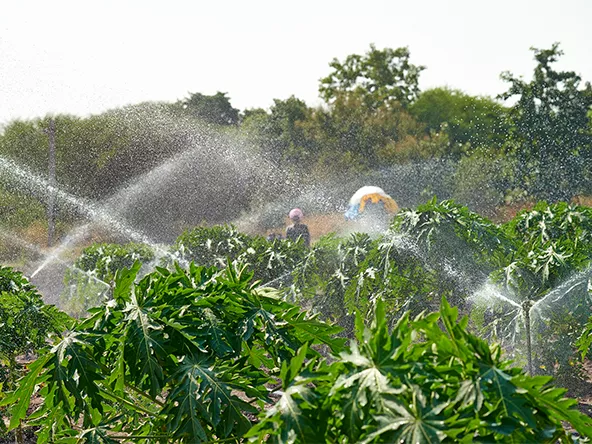
Our climate action plan focuses on
This encompasses a host of initiatives including investments in green infrastructure such as green buildings and renewable energy, sequestration through large-scale afforestation, climate smart and regenerative agriculture, integrated water stewardship, biodiversity conservation, promoting a circular economy as well as building resilience of rural communities.
Climate Risk Assessment
To secure our operational footprint from extreme weather events, we have carried out a climate risk modelling exercise at a pan-organisation level to identify and prioritise vulnerable sites. These assessments utilise latest AI-enabled climate modelling tools for projecting the extent of risk from climate hazards related to changes in temperature, precipitation, sea level rise, flooding and other extreme weather events over decadal time frames covering the period till 2100 under various Shared Socioeconomic Pathways (SSPs) scenarios. Based on these assessments, site-specific actions including those for key agri-value chains are being taken accordingly.
ITC has carried out climate risk assessment across 140+ sites using latest climate models at a pan organisation level
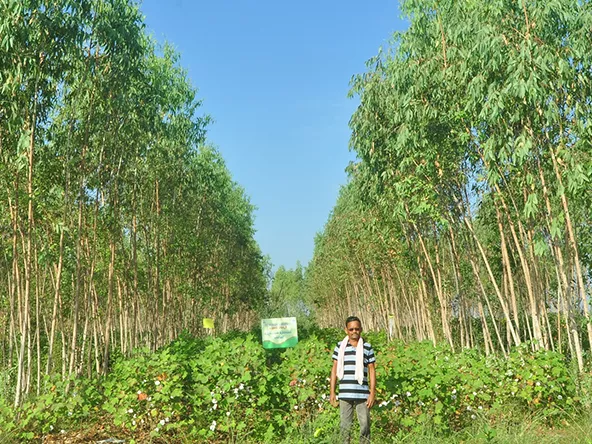
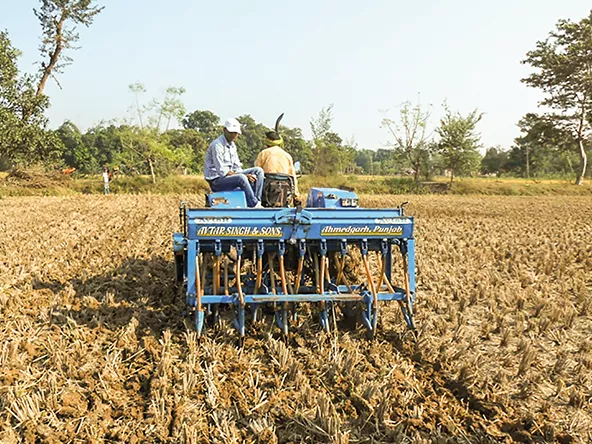
Adaptation in Value Chains
ITC is engaged in building the resilience of key crop value chains like wheat, pulpwood, potato, and spices among others. ITC's efforts include:
Climate Proofing Physical Assets
Our extensive manufacturing base including factories and warehouses as well as hotels are exposed to climate change-related risks. We have been working towards enhancing the climate resilience of our physical assets including our third-party sites.
Climate Risk Management:
Leveraging the latest AI-enabled climate risk model to identify vulnerable sites
Detailed site-level and hazard-specific assessments
Locally contextual adaptation plans
ITC's locally contextual adaptation plan includes:
At the site: Physical measures such as hard engineering or nature-based solutions and non-physical measures such as early warning systems, and promotion of best practices for extreme weather management.
In the catchments: Engaging with local authorities and communities to build community resilience to climate change.
Nature Based Solutions
To improve climate resilience, particularly of local communities linked to agriculture, we have also implemented nature-based solutions which include:
Alignment to SDGs


Know more about ITC's Sustainability Interventions
Follow us on-


Registered Office:
ITC LIMITED
Virginia House, 37, J. L. Nehru Road, Kolkata - 700071, India
Corporate Identity Number: L16005WB1910PLC001985
Ph: +91-33-22889371 || Fax: +91-33-22880655
Working Hours: (Monday to Friday)- 9:00AM to 6:00PM
For any queries or grievances, contact Mr. Aurko Dasgupta at contactus@itc.in